
Getting money from a lawsuit or insurance claim can be life-changing, but what happens when you receive payments over many years instead of a lump sum? This is where structured settlement loans come into play. If you’re receiving payments from a structured settlement but need cash right now, a structured settlement loan might be exactly what you need.
Let’s explore everything about structured settlement loans, from how they work to the best companies that offer them. We’ll also look at real examples and explain how structured settlement annuities fit into the picture.
What Is a Structured Settlement Loan?
A structured settlement loan is a financial product that allows you to get immediate cash by using your future structured settlement payments as collateral. Think of it like borrowing money against payments you’re guaranteed to receive later.
Here’s how it works in simple terms:
- You have a structured settlement that pays you money over time
- You need cash now for emergencies, bills, or opportunities
- A structured settlement loan company gives you money upfront
- You repay the loan using your future settlement payments
Why People Choose Structured Settlement Loans
Many people find themselves in situations where they need money faster than their scheduled payments arrive. Common reasons include:
- Medical emergencies that require immediate payment
- Home repairs after unexpected damage
- Education costs for yourself or family members
- Debt consolidation to reduce monthly payments
- Business opportunities that can’t wait for regular payments
- Family emergencies requiring quick financial help
How Structured Settlement Loans Work
The process of getting a structured settlement loan is straightforward, but it’s important to understand each step:
Step 1: Application Process
- Contact a structured settlement loan company
- Provide details about your structured settlement
- Submit required documents and verification
- Wait for approval (usually 24-48 hours)
Step 2: Loan Terms Review
- Loan amount: Based on your future payment value
- Interest rates: Typically range from 8% to 25%
- Repayment schedule: Aligned with your settlement payments
- Fees: Application fees, processing costs, and other charges
Step 3: Funding
Once approved, you typically receive your money within 1-5 business days through:
- Direct bank deposit
- Cashier’s check
- Wire transfer
Top Structured Settlement Loan Companies
Choosing the right structured settlement loan companies is crucial for getting fair terms and reliable service. Here are some of the most reputable options:
1. Peachtree Financial Solutions
- Years in business: Over 25 years
- Specialties: Quick approvals, competitive rates
- Loan amounts: $5,000 to $500,000
- Processing time: 24-48 hours
2. J.G. Wentworth
- Known for: Extensive marketing and brand recognition
- Services: Structured settlement loans and purchases
- Customer support: 24/7 phone assistance
- Special features: Mobile app for account management
3. Seneca One Finance
- Focus: Personalized customer service
- Loan terms: Flexible repayment options
- Interest rates: Competitive market rates
- Additional services: Financial counseling
4. Liberty Settlement Funding
- Strengths: Fast processing, transparent fees
- Minimum loan: $2,500
- Maximum loan: Based on settlement value
- Special programs: Emergency funding options
| Company | Min Loan | Max Loan | Processing Time | Special Features |
|---|---|---|---|---|
| Peachtree Financial | $5,000 | $500,000 | 24-48 hours | Quick approval |
| J.G. Wentworth | $3,000 | No limit | 3-5 days | Mobile app |
| Seneca One Finance | $2,000 | $1,000,000 | 2-4 days | Financial counseling |
| Liberty Settlement | $2,500 | Varies | 1-3 days | Emergency funding |
Structured Settlement Company Types
When dealing with structured settlements, you’ll encounter different types of structured settlement company options:
Primary Settlement Companies
These companies originally set up your structured settlement:
- MetLife: One of the largest insurance providers
- Prudential: Offers comprehensive settlement services
- New York Life: Known for stable, long-term payments
- Pacific Life: Specializes in structured settlement annuities
Secondary Market Companies
These companies buy existing structured settlements:
- Stone Street Capital: Focuses on large settlement purchases
- CBC Settlement Funding: Offers partial and full purchases
- Fairfield Funding: Provides various funding options
- Access Funding: Specializes in quick cash solutions
Loan Companies vs. Purchase Companies
It’s important to understand the difference between companies that offer loans versus those that purchase your payments:
Loan Companies:
- You keep ownership of your structured settlement
- Payments continue after loan repayment
- Generally lower cost than selling payments
- More flexible terms available
Purchase Companies:
- You sell some or all future payments
- Higher upfront cash amounts
- Permanent transfer of payment rights
- Court approval usually required
Structured Settlement Annuity Basics
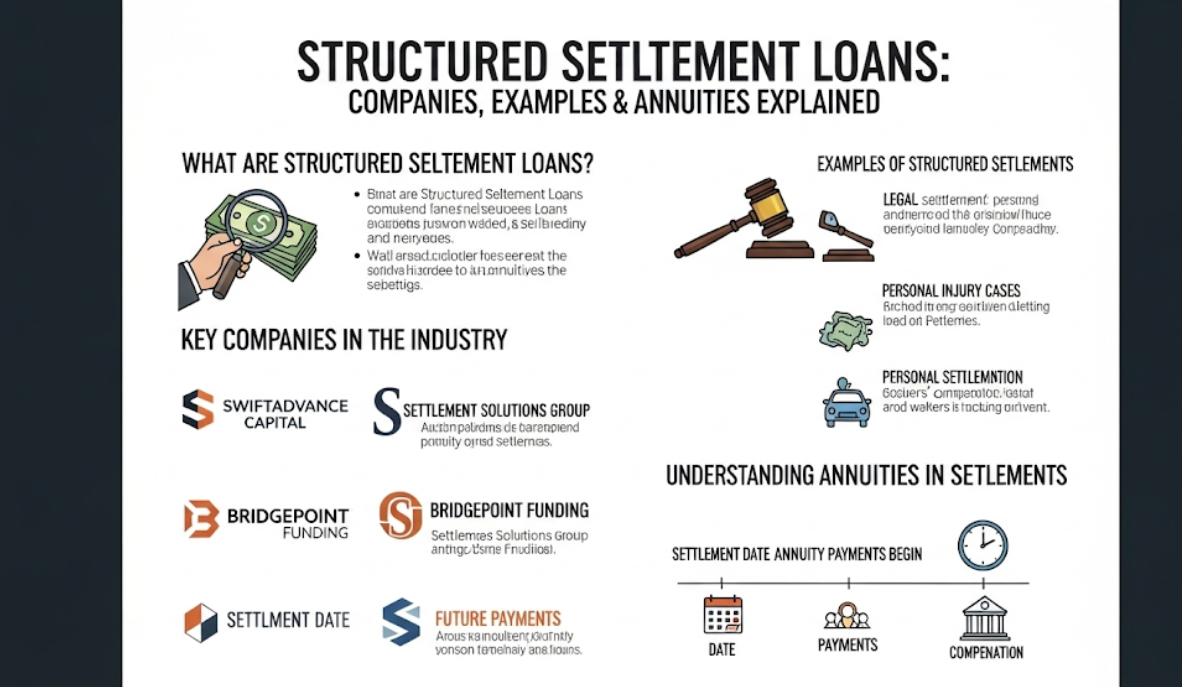
A structured settlement annuity is the financial product that actually provides your scheduled payments. Understanding annuities helps you make better decisions about loans.
How Structured Settlement Annuities Work
When you receive a structured settlement, an insurance company purchases an annuity that guarantees your payments. Here’s the breakdown:
- Settlement agreement is reached in your case
- Insurance company purchases an annuity from a life insurance provider
- Annuity company makes scheduled payments to you
- Payments continue according to the agreed schedule
Types of Structured Settlement Annuities
Immediate Annuities
- Payments start right away
- Good for people who need regular income
- Lower initial lump sum options
Deferred Annuities
- Payments start at a future date
- Allow for larger payments later
- Often used for retirement planning
Life Annuities
- Payments continue for your entire life
- Provide long-term financial security
- Cannot be outlived
Term Certain Annuities
- Payments for a specific number of years
- Predictable end date
- Can be inherited by beneficiaries
Real Structured Settlement Examples
Let’s look at some structured settlement examples to help you understand how they work in real life:
Example 1: Car Accident Settlement
Situation: Sarah was injured in a car accident caused by a drunk driver.
Settlement terms:
- Total settlement: $500,000
- Initial lump sum: $50,000
- Monthly payments: $2,500 for 15 years
- Total payments: $500,000 ($50,000 + $450,000)
Why Sarah chose a structured settlement loan:
- Needed $25,000 for medical treatments not covered by insurance
- Didn’t want to sell her future payments permanently
- Got a loan using 10 months of payments as collateral
Example 2: Medical Malpractice Case
Situation: Michael won a medical malpractice lawsuit after a surgical error.
Settlement terms:
- Total settlement: $1,200,000
- Immediate payment: $200,000
- Annual payments: $50,000 for 20 years
- Total annual payments: $1,000,000
How Michael used a structured settlement loan:
- Started a business requiring $75,000 initial investment
- Borrowed against 18 months of future payments
- Used business profits to repay loan early
Example 3: Worker’s Compensation Settlement
Situation: Lisa received a worker’s compensation settlement after a workplace injury.
Settlement terms:
- Total settlement: $300,000
- Monthly payments: $1,250 for 20 years
- No initial lump sum
Lisa’s loan scenario:
- Daughter needed $15,000 for college tuition
- Qualified for loan based on 12 future payments
- Chose loan over payment sale to maintain long-term income
Pros and Cons of Structured Settlement Loans
Before deciding on a structured settlement loan, consider these advantages and disadvantages:
Advantages of Structured Settlement Loans
Financial Flexibility
- Get cash when you need it most
- Keep your structured settlement intact
- Maintain future payment stream
Speed and Convenience
- Quick approval process (24-72 hours)
- Minimal paperwork required
- No court approval needed (unlike payment sales)
Credit Benefits
- Help build or repair credit history
- On-time payments improve credit scores
- Alternative for people with poor credit
Preserve Long-term Security
- Keep receiving payments after loan payoff
- Maintain financial stability for the future
- Protect against inflation with continued payments
Disadvantages of Structured Settlement Loans
Higher Costs
- Interest rates can be expensive (8-25%)
- Additional fees and charges apply
- Total cost may exceed payment sale options
Risk of Default
- Missing payments can damage credit
- Potential loss of collateral (future payments)
- Legal consequences for non-payment
Reduced Future Income
- Part of payments go to loan repayment
- Less money available for other needs
- Potential cash flow problems
Alternatives to Structured Settlement Loans
Before choosing a structured settlement loan, consider these alternatives:
1. Selling Future Payments
- Get larger lump sum amounts
- No ongoing repayment obligations
- Requires court approval
- Permanent loss of sold payments
2. Traditional Bank Loans
- Potentially lower interest rates
- Established banking relationships
- May require good credit and income verification
- Structured settlement not typically accepted as collateral
3. Personal Lines of Credit
- Flexible borrowing options
- Only pay interest on amount used
- Variable interest rates
- Credit limits based on creditworthiness
4. Family and Friends
- No interest or low interest rates
- Flexible repayment terms
- Potential relationship complications
- Limited availability for large amounts
How to Choose the Right Structured Settlement Loan Company
Selecting the best structured settlement loan provider requires careful research and comparison:
Key Factors to Consider
Interest Rates and Fees
- Compare annual percentage rates (APR)
- Ask about all fees upfront
- Calculate total loan cost
- Look for hidden charges
Company Reputation
- Check Better Business Bureau ratings
- Read customer reviews online
- Verify licensing and credentials
- Ask for references from past clients
Loan Terms
- Review repayment schedules
- Understand default consequences
- Check for early repayment options
- Evaluate flexibility in terms
Customer Service
- Test responsiveness during application
- Evaluate communication quality
- Check availability of support
- Assess transparency in explanations
Red Flags to Avoid
When researching structured settlement loan companies, watch out for:
- Extremely high-pressure sales tactics
- Guaranteed approvals regardless of situation
- Requests for upfront fees before approval
- Unwillingness to explain terms clearly
- No physical address or proper licensing
- Promises that seem too good to be true
The Application Process Step-by-Step
Getting a structured settlement loan involves several important steps:
Before You Apply
- Calculate your needs: Determine exactly how much money you need
- Review your settlement: Understand your payment schedule and amounts
- Check your credit: Know your credit score and history
- Gather documents: Collect settlement paperwork and identification
During Application
- Complete application forms with accurate information
- Provide required documentation:
- Structured settlement agreement
- Recent payment statements
- Government-issued ID
- Social Security card
- Bank statements
- Wait for underwriting review (typically 24-48 hours)
- Review loan terms carefully before signing
- Ask questions about anything you don’t understand
After Approval
- Sign loan documents electronically or in person
- Set up repayment through automatic deductions
- Receive funds via your chosen method
- Monitor payments to ensure proper processing
- Keep records of all loan-related documents
Managing Your Structured Settlement Loan
Once you have your loan, proper management is essential for success:
Best Practices for Repayment
Set Up Automatic Payments
- Ensure on-time payments every month
- Avoid late fees and penalties
- Protect your credit score
- Simplify your financial management
Budget for Loan Payments
- Account for reduced structured settlement income
- Plan for other expenses carefully
- Build emergency fund if possible
- Track spending to stay on budget
Communicate with Your Lender
- Report any changes in circumstances
- Ask questions when needed
- Request payment modifications if struggling
- Maintain good relationship for future needs
What to Do If You Can’t Make Payments
Financial difficulties can happen to anyone. If you’re struggling with loan payments:
- Contact your lender immediately – Don’t wait until you miss payments
- Explain your situation honestly – Lenders often work with borrowers facing hardship
- Request modification options – Ask about payment deferrals or restructuring
- Explore alternatives – Consider selling some payments to pay off the loan
- Seek financial counseling – Professional advice can help you find solutions
Future Trends in Structured Settlement Financing
The structured settlement loan industry continues to evolve with new trends and regulations:
Technology Improvements
- Faster online applications with instant pre-approval
- Mobile apps for account management and payments
- Digital document signing for quicker processing
- AI-powered underwriting for more accurate risk assessment
Regulatory Changes
- Increased consumer protections at state and federal levels
- Stricter disclosure requirements for loan terms and costs
- Enhanced licensing standards for companies
- Better complaint resolution processes
Market Developments
- More competitive interest rates due to increased competition
- Flexible loan products tailored to specific needs
- Improved customer service standards across the industry
- Educational resources to help borrowers make informed decisions
Making the Right Decision for Your Financial Future
Choosing whether to get a structured settlement loan is a significant financial decision that requires careful consideration. Here are the key points to remember:
When a Structured Settlement Loan Makes Sense
- You have a genuine financial emergency
- The loan amount is reasonable compared to your settlement value
- You understand all terms and costs involved
- You have a solid plan for repayment
- Traditional financing isn’t available or suitable
When to Consider Alternatives
- You need a very large amount of cash
- Interest rates are prohibitively expensive
- Your financial situation is unstable
- You’re considering this for non-essential expenses
- You haven’t explored other options thoroughly
Conclusion
Structured settlement loans can provide valuable financial flexibility for people receiving structured settlement payments. By borrowing against your future payments, you can access cash when you need it most while maintaining your long-term income stream.
The key to success with structured settlement loans lies in choosing reputable structured settlement loan companies, understanding all terms and costs, and having a solid repayment plan. Whether you’re dealing with medical emergencies, educational expenses, or business opportunities, these loans can bridge the gap between your current needs and future settlement payments.
Remember that while structured settlement loans offer immediate access to cash, they do come with costs and responsibilities. Take time to compare options from multiple structured settlement company providers, read all terms carefully, and consider alternatives before making your final decision.
For more information about financial solutions and structured settlements, visit Finverse USA to explore additional resources and expert guidance.
By understanding structured settlement annuity products, reviewing real structured settlement examples, and working with reputable lenders, you can make an informed decision that supports both your immediate needs and long-term financial security. Whether you choose a structured settlement loan or explore other options, the most important thing is finding a solution that works for your unique situation.
